
The kids grew. The apartment stayed small. The bills stayed loud. But we had one thing money couldn’t buy: we had each other, every single day.
That Sunday afternoon, we were eating a simple meal—fried chicken, rice, and laughter that made our tiny rental feel bigger than any mansion.
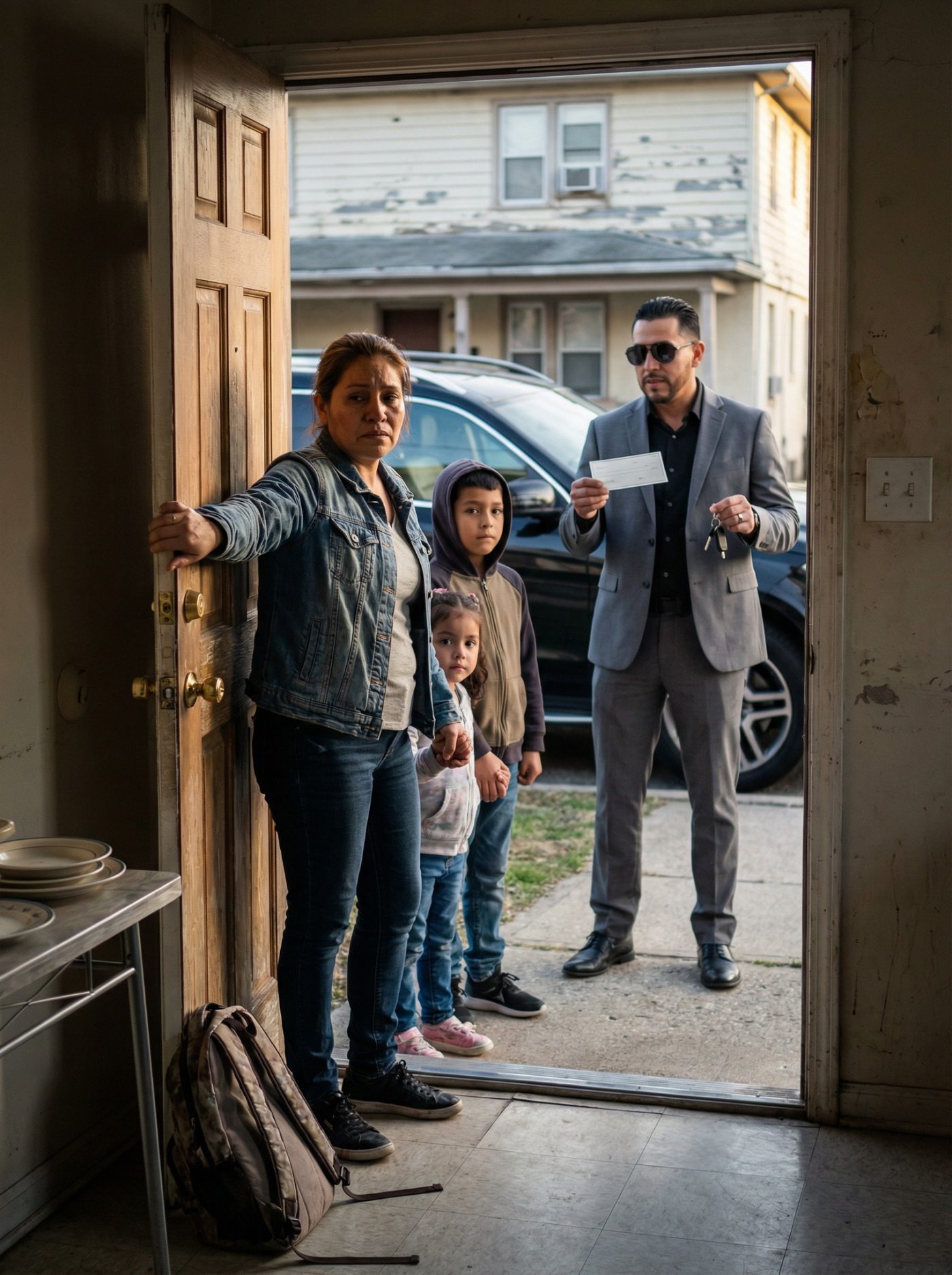
Then a black SUV stopped in front of our building.
A man in a tailored suit stepped out, wearing sunglasses, followed by two bodyguards.
My heart dropped before my mind caught up.
It was Derek.
He didn’t knock. He pushed through the gate like he owned the place. He scanned our cramped living room with the kind of disgust reserved for things he thought were beneath him.
“Claire,” he said, as if we were old friends. “It’s hot in here. This is where you raised my kids?”
I stood up instinctively and moved the children behind me. “What are you doing here?”
“I’m taking them,” he replied, casual, almost bored. “My grandfather died. I inherited businesses overseas and large properties. I’m rich now. I can finally give them the life they deserve.”
Then he leaned toward Leo, smiling like a camera was on him.
“Leo. Son. It’s Dad.”
Leo didn’t smile.
He took one step backward.
Derek’s expression flickered—surprise, then annoyance—like affection was something he expected to be paid back with interest.
He tried again, louder, for the benefit of everyone.
“Listen,” Derek said to the kids, “you come with me today. I have a big house. A pool. I’ll buy you a PS5, new phones, whatever you want. You won’t have to suffer here—no more heat, no more cheap food, no more struggling with your aunt.”
Then he turned to me and pulled out a blank check, holding it like a weapon dressed as generosity.
“Write whatever you want,” Derek said. “Payment for five years. That should be enough for you to start your own life. Get married. Let go of my children.”
For a moment, I couldn’t speak. My hands shook—not with fear, but with rage so clean it felt like clarity.
“Payment?” I said, voice rising. “You think raising them was a service? You think children are something you can buy back like property?”
“Don’t act righteous,” Derek snapped, irritation cutting through his fake calm. “You have nothing to offer them but poverty. I can give them the world. I’m their father. I have rights.”
“Rights?” I took a step closer, unable to stop myself. “Where were your rights when their mother was dying? Where were you when Ben cried at night because he was hungry? Where were you when I worked until my hands were raw just to keep the lights on? You lost your ‘rights’ the day you turned your back on them.”
Derek’s jaw tightened. Then he smiled, cold and confident.
“Fine,” he said. “Let them choose.”
He knelt in front of the kids like he was proposing, not collecting.
He showed them the car keys. He flashed photos of a mansion—white marble floors, giant staircase, sunlight pouring through glass like a promise.
“Kids,” Derek said softly, “do you want to come with Dad to the mansion… or stay here with your aunt who has no money?”
The room went silent.
My stomach twisted. Because I knew our life was hard. I knew what I couldn’t give them—air-conditioning in summer, expensive tutors, new shoes without waiting for a sale.
Derek’s gaze locked on Leo.
“You’re the oldest,” he said. “You understand. You want to be a pilot, right? I can send you to school in America. Come with me.”
Leo inhaled slowly.
Then he reached down and took Mia’s hand. Ben’s hand too. He held them tight, like he was anchoring himself to what mattered.
He looked Derek straight in the eyes and spoke with a calm that didn’t belong to a twelve-year-old.
“Sir,” Leo began.
Derek blinked. “Sir? Call me Dad.”
“Sir Derek,” Leo continued, voice steady. “I remember when you left.”
Derek’s smile faltered.
Leo didn’t rush. He didn’t shout. That made it worse—for Derek.
“Mama was crying,” Leo said, eyes shining but unblinking. “She was sick. She was throwing up blood. And you packed your bag and walked out. You said, ‘You’re on your own.’”
My throat tightened so hard I thought I would choke.
Leo pointed toward me.

Leave a Comment